How to Choose an Automatic Cat Litter Box: Why Cats Hate Enclosed Drums & The Real Engineering Behind Odor Control
Before spending $350–$500 on a self-cleaning robot, understand feline ambush psychology, anti-pinch sensor blindspots, and why open-top vs. enclosed globe architecture determines whether your cat actually uses it.

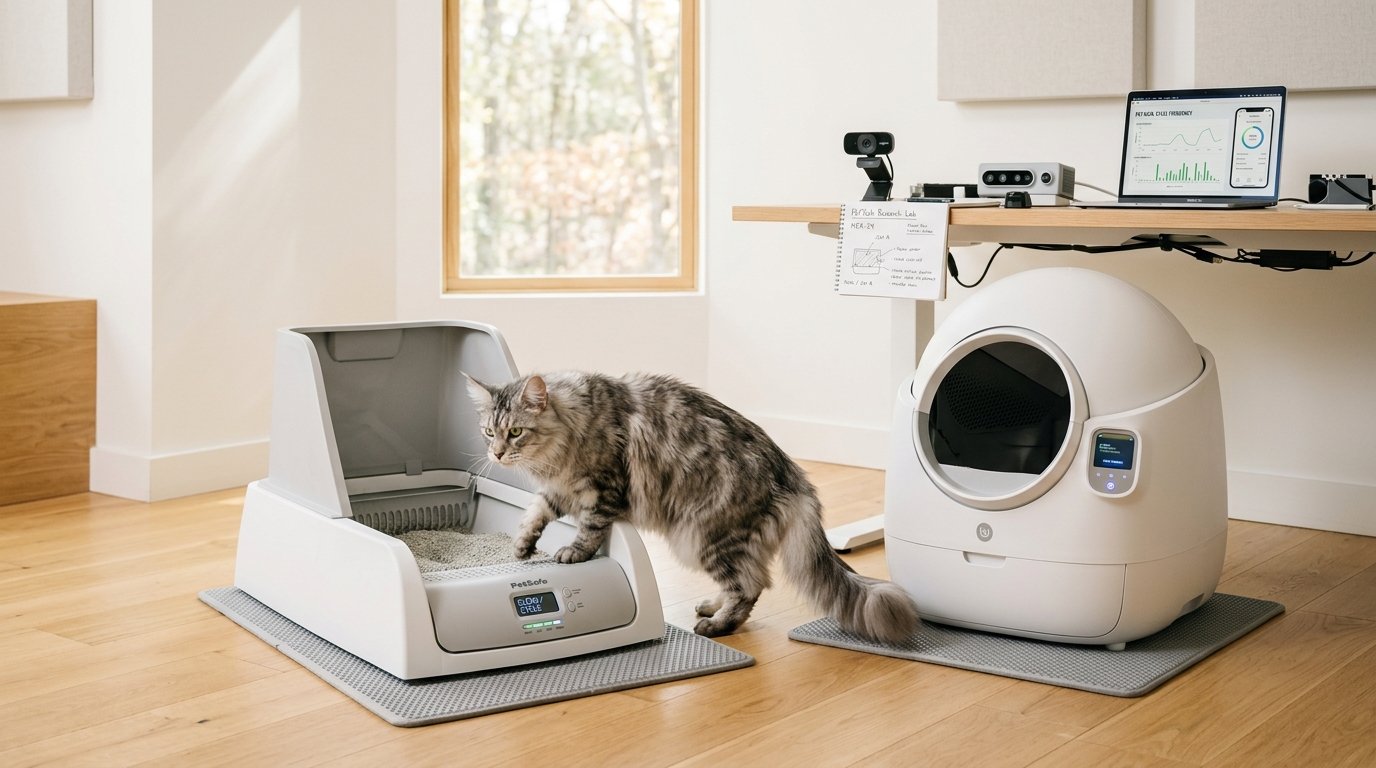
The automatic litter box market has matured, but the biggest risk remains behavioral rejection: if your cat feels trapped or ambushed inside an enclosed rotating drum, they will pee on your rug instead. Open-top designs (like the Neakasa M1 Plus) solve feline claustrophobia and fit 20+ lb cats, while sealed globe enclosures (like the PETKIT Purobot Max) offer maximum chemical odor lock for small apartments.
The $400 Dust-Collecting Regret vs. The Daily Scooping Grind
Ask any multi-cat owner about their least favorite household chore, and the answer is unanimous: bending over a plastic tray twice a day, inhaling clouds of silicate dust, and scraping ammonia-soaked clumps cemented to plastic corners. Over a ten-year feline lifespan, an average cat parent scoops over 7,300 times and dumps nearly two tons of soiled gravel.
It is no surprise that automatic, self-cleaning litter boxes have become the holy grail of modern pet appliances. The promise is seductive: pour in litter, let intelligent mechanical gears separate clean granulate from waste, and empty an airtight drawer once every two weeks.
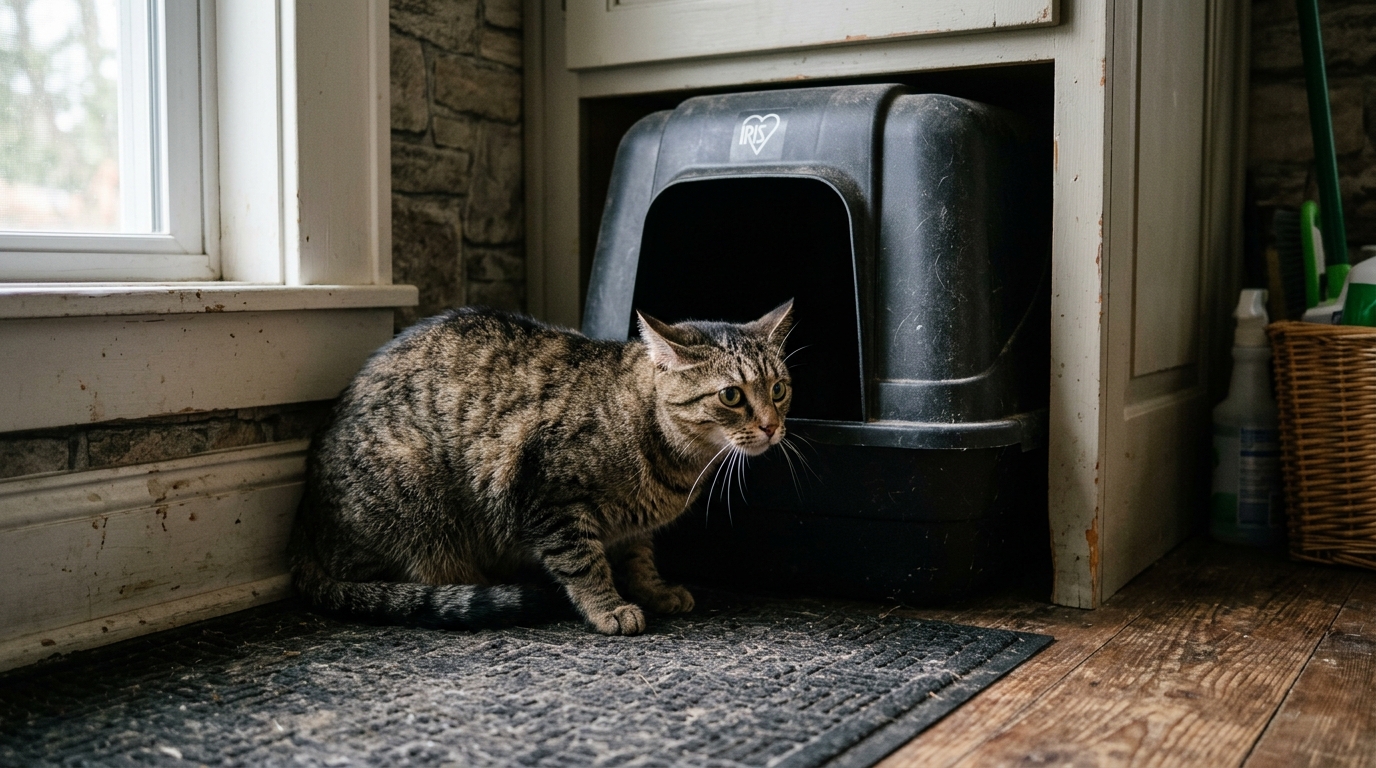
Yet thousands of buyers discover a heartbreaking reality within 72 hours of unboxing a $400 motorized unit: their cat refuses to step inside. Cats are semi-arboreal obligate carnivores. During elimination, their evolutionary instinct demands 360-degree environmental awareness.
When forced into a cramped, dark cylinder that smells of residual motor oil and previous urine, many cats experience acute claustrophobia—resulting in inappropriate urination on bath mats, laundry baskets, and expensive mattresses.
The 3 Failure Points of Automatic Litter Boxes
Before looking at app features or Bluetooth connectivity, evaluate how any smart litter box handles these three critical physical failure modes.
Entry Geometry & Claustrophobia: Why Large Cats Reject Globe Enclosures
Traditional self-cleaning litter boxes (like older globe models) utilize a circular porthole entrance measuring 9 to 10 inches wide. For a 9 lb kitten, this feels manageable. But for a 14–22 lb Maine Coon, Ragdoll, or adult domestic tabby, turning around inside a dark 50-liter sphere forces their whiskers against curved plastic walls (whisker fatigue) and prevents them from adopting a natural squat posture.
Motor Safety & Pinch-Point Mechanics: The Non-Negotiable Sensors
The most horrific failure mode of automatic litter boxes is an uncalibrated rotating mechanism trapping a curious kitten. Early generation machines relied on single infrared beam sensors that blinded easily when coated in fine clay dust. Premium modern appliances must feature tri-redundant safety: microwave radar (detecting motion within 1.5 meters), weight load cells under each foot, and physical motor stall current detection that cuts power in under 120 milliseconds upon physical resistance.
Penetrates plastic casings and tracks cat approach vectors before the animal touches the unit, immediately pausing rotation.
Detects sudden weight increases down to 100 grams, distinguishing between a wandering kitten and a clumping rake drag.
Hardware fail-safe: if rotational torque spikes (indicating physical obstruction), the planetary gearbox reverses instantly.
Odor Control Chemistry: Mechanical Bag-Sealing vs. Aerosol Neutralizers
Cat urine produces volatile organic compounds, notably ammonia and felinine, which can quickly saturate an enclosed apartment. Trapping these fumes requires distinct engineering paths:
- The "Pull & Wrap" Mechanical Seal: (Utilized in open-top machines like the Neakasa M1) Pulling a string hermetically seals the trash bag before you ever touch it, ensuring zero airborne puff upon bin removal.
- Active Smart Spray Chambers: (Utilized in enclosed units like PETKIT Purobot Max) An ultrasonic atomizing nozzle dispenses deodorizing mist after every cycle, neutralizing airborne ammonia inside a silicone-gasketed canister.
Find the Right Architecture in 15 Seconds
Select your living situation and feline temperament:
Your cat requires zero visual obstruction and ample turning radius. The open-top basin eliminates fear rejection, while the Pull-and-Pack trash system seals clumps with zero hand-to-waste contact.
Our Two Laboratory-Selected Picks
After screening 22 smart litter models against sensor latency, waste volume capacity, and long-term motor reliability, these two appliances earned our technical recommendation based on feline adoption rates and engineering tolerances.
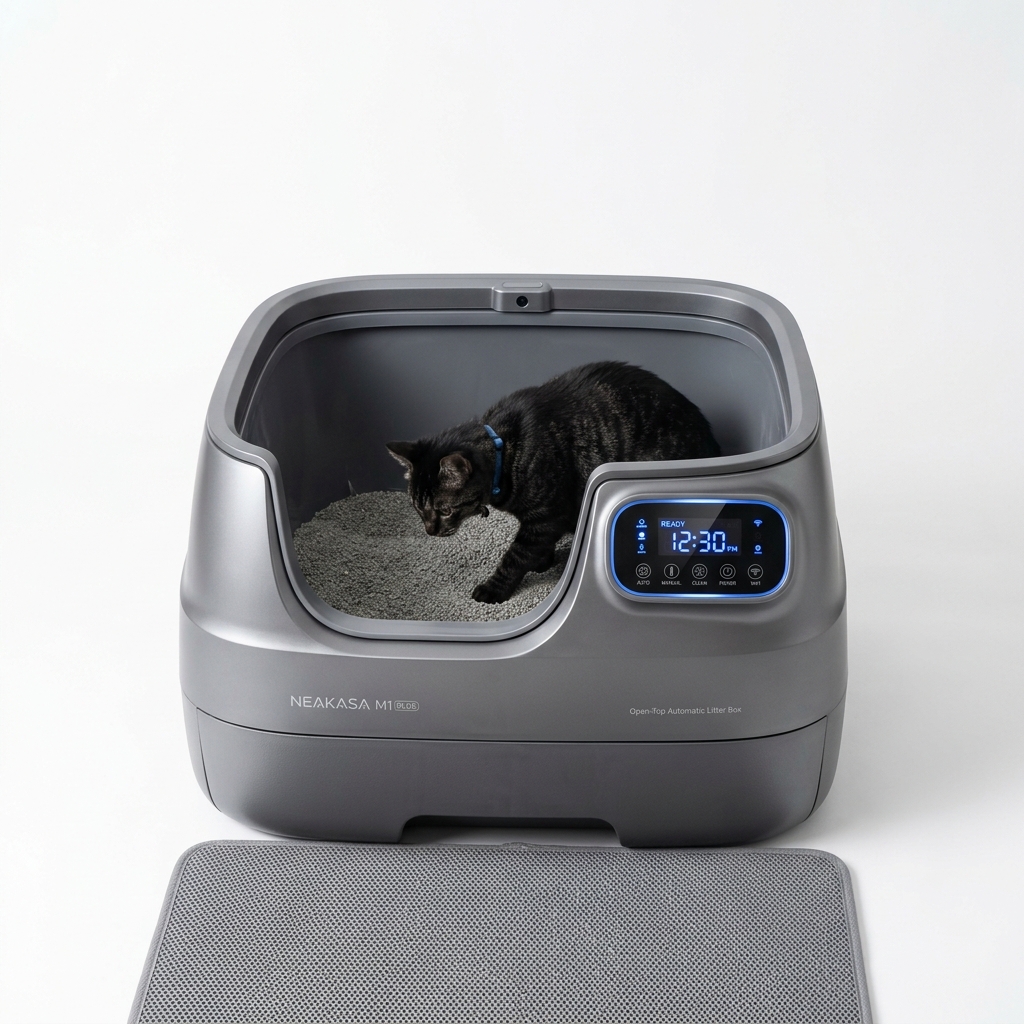
Neakasa M1 Plus Automatic Cat Litter Box
Engineered with an open-top sifting tub and included 2-Year Protection Plan for large cats, skittish felines, and zero-fear adoption.
Zero claustrophobia open-top: 360° sightline eliminates feline panic; comfortably accommodates large breeds up to 33 lbs.
Pull-and-pack trash sealing: Pulling the front drawstring automatically ties the waste bag airtight with zero dirty contact.
Included 2-year warranty plan: High-value protection bundle directly addresses motor and electronic longevity.
Brief odor release on dump: Because the top is open, a faint puff of scent escapes during the active 45-second sifting tilt.
Best with granulated litter: Performs best with clay or fine cassava; long tofu pellets can sift sluggishly.
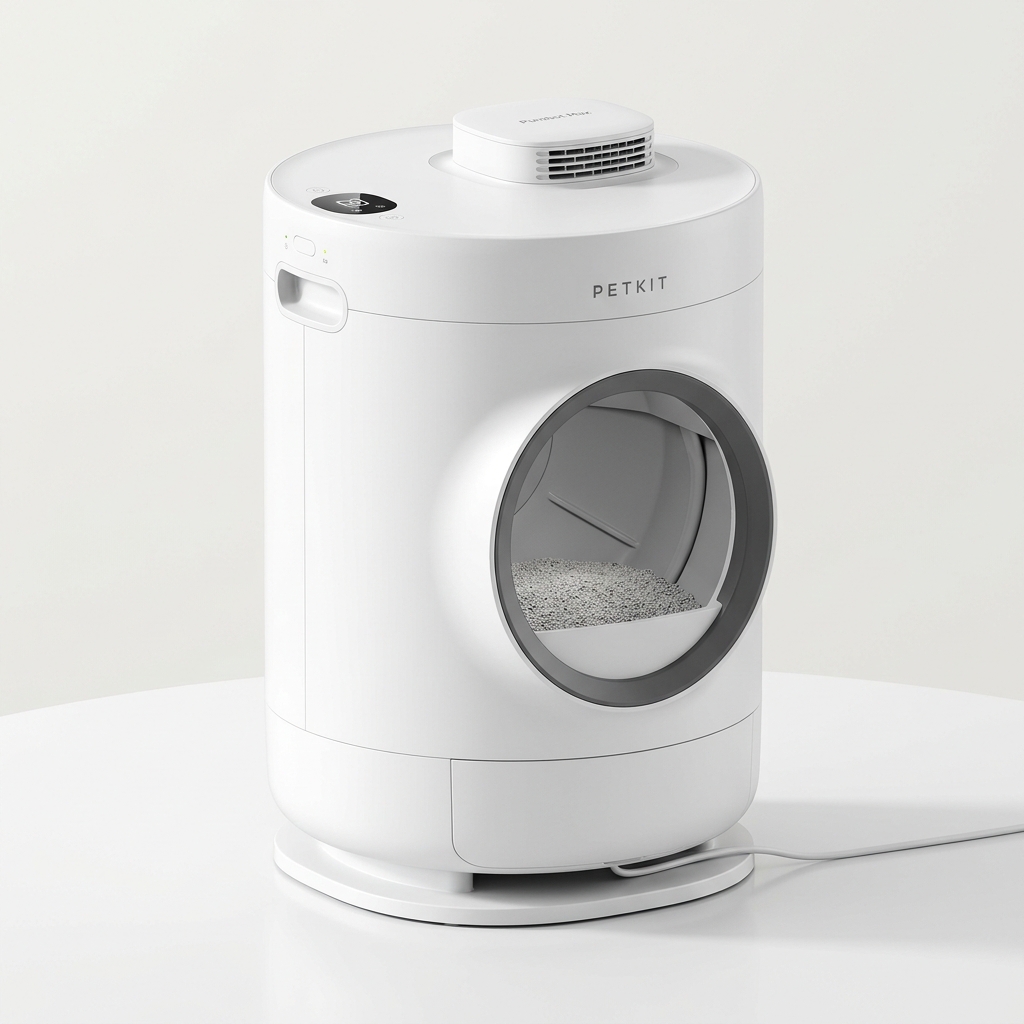
PETKIT Purobot Max 3 Odor-Free Litter Box
The enclosed smart sanitation station with active odor-eliminating spray, leak-proof silicone bed, and multi-cat weight tracking.
Hermetic chemical odor lock: Automatic deodorizing aerosol mist + silicone gasket bin leaves zero ambient ammonia in apartments.
Anti-leak seamless interior: Non-stick composite bottom prevents high-peeing cats from leaking urine into the motor base.
Comprehensive telemetry app: Accurately tracks individual cat weights and daily elimination frequency across multiple pets.
Proprietary consumable costs: Requires official PETKIT deodorizing liquid refills and custom-fitted trash bags.
Enclosed globe hesitation: Some skittish or senior cats require weeks of desensitization before stepping inside.
Laboratory Benchmark Comparison
The Final Verdict: Which Smart Box Fits Your Home?
Choose the Neakasa M1 Plus if:
- ✓ You own a Maine Coon, Ragdoll, British Shorthair, or any cat over 11–12 lbs.
- ✓ Your cat has previously rejected covered litter boxes or suffers from anxiety.
- ✓ You want peace of mind with an included 2-Year Protection Plan out-of-the-box.
Choose the PETKIT Purobot Max if:
- ✓ You live in a studio, small condo, or enclosed apartment where odor is top priority.
- ✓ Your cats are medium-sized or already accustomed to enclosed litter caves.
- ✓ You want daily telemetry graphs tracking individual pet weights via app.
Frequently Asked Questions
Can kittens under 6 months use automatic litter boxes? ▼
Kittens under 3.5 lbs should NOT use automatic cleaning cycles because their low weight may fail to trigger certain weight load-cell safety cutoffs. Always use the box in manual mode (power off, scoop manually or trigger cycles manually via app when present) until kittens reach at least 4 lbs.
How often do I need to completely clean the drum? ▼
While the automated sifter separates daily clumps, residual urine dust adheres to liners over time. We recommend a full wash-down every 6 to 8 weeks. Neakasa’s open basin unclips in two pieces, while PETKIT’s cylinder detaches with a rear latch.
What type of litter produces the fewest clogs? ▼
Fast-clumping, low-dust sodium bentonite clay or fine-grain crushed cassava litter sifts most reliably through mechanical grids. Avoid oversized pellet litters (pine pellets or long tofu strands) as they may get caught in the sifting teeth.